

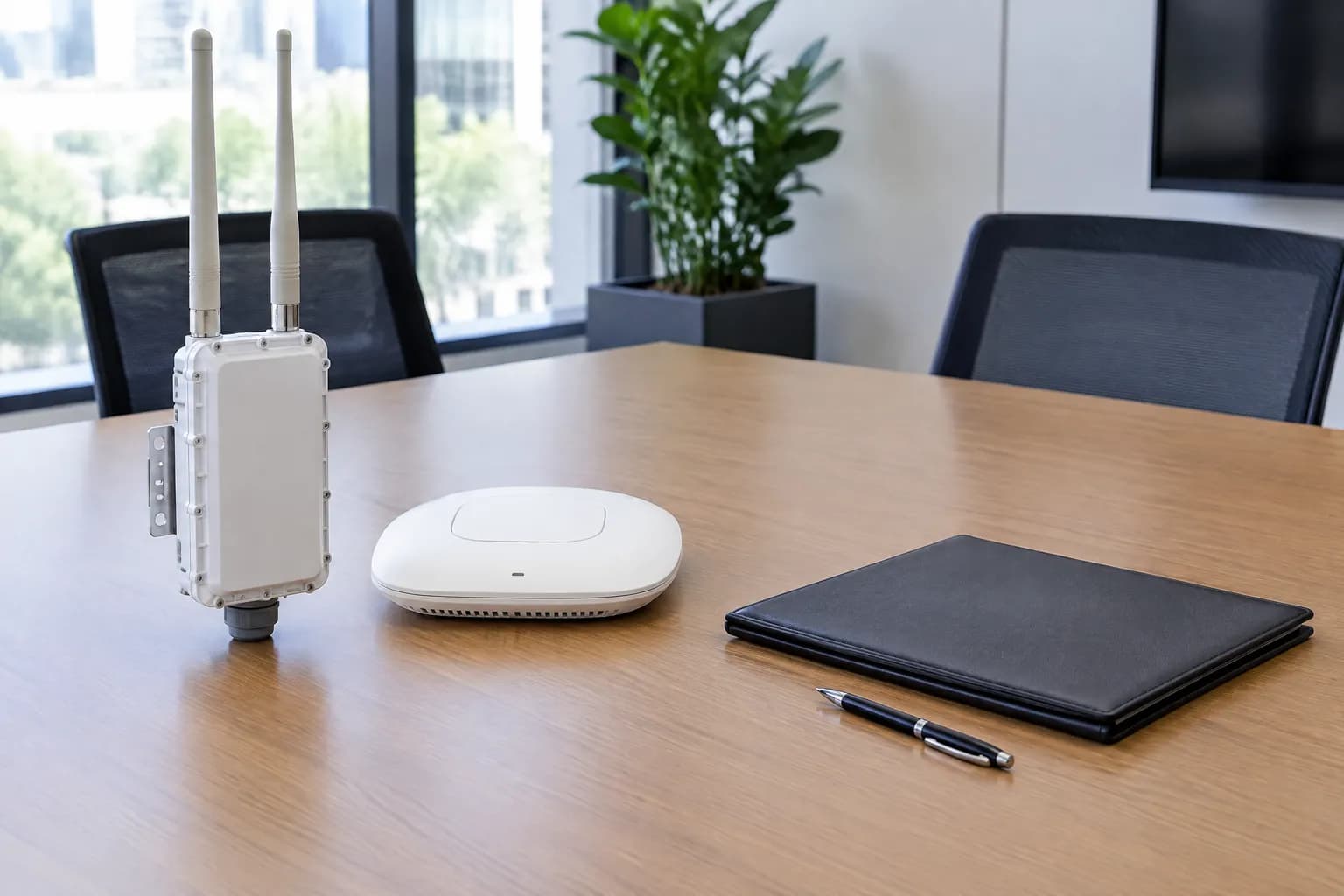
Most African countries require Wi-Fi access points, cellular routers, point-to-point radios and other radio equipment to be type-approved by the national communications regulator before it is imported, sold or used, so check each model's approval status, and who holds the approval, before you place an order.
What is type approval?
Type approval is a regulator's confirmation that a specific equipment model meets the country's technical requirements, typically covering radio emissions, frequency use, electromagnetic compatibility and safety. It is granted to a model rather than an individual unit and is usually recorded against the model number and manufacturer. Once a model is approved, identical units can generally be imported under that approval, subject to any conditions the regulator attaches.
Requirements, processes and documents vary by country and change over time. This guide describes the general pattern; it is not legal advice, and the regulator's current rules are always the reference.
Which networking products usually need it?
- Wi-Fi access points, wireless routers and mesh systems
- LTE and 5G routers, modems and cellular gateways
- Point-to-point and point-to-multipoint radios, including 60 GHz and E-band links
- Licensed microwave radios, which also need a frequency assignment
- Wi-Fi ONTs and other customer equipment with built-in radios
- IoT gateways and devices with Bluetooth, LoRa or similar radios
Some regulators also require approval for wired telecom terminal equipment. Passive items such as cabling, patch panels and racks normally fall outside type approval, though they may come under product-conformity programmes run by national standards bodies.
Who regulates radio equipment? Some examples
| Country | Regulator | What to check |
|---|---|---|
| Nigeria | Nigerian Communications Commission (NCC) | Whether the model appears in the NCC's type-approval records |
| Kenya | Communications Authority of Kenya (CA) | Whether the model is on the Authority's list of type-approved equipment |
| South Africa | Independent Communications Authority of South Africa (ICASA) | Type approval status and any band-specific conditions |
| Ghana | National Communications Authority (NCA) | Type approval status for the model and its variant |
| Tanzania | Tanzania Communications Regulatory Authority (TCRA) | Type approval status and importer obligations |
| Uganda | Uganda Communications Commission (UCC) | Type approval status and importer obligations |
Who applies: the manufacturer, the importer or a local agent?
It depends on the country. Some regulators accept applications from manufacturers directly; others require a locally registered applicant or representative. Large vendors often hold approvals for their popular models in major markets, but not for every model or every variant, and new models may not yet be approved. Approvals can also expire or need renewal.
For buyers the practical consequence is simple. An approval already held for a model is generally what lets importers bring that model in. If the model you want is not approved, either choose an approved alternative or start an application through whoever the regulator accepts as applicant, and plan the project timeline around it.
What documents usually support an application?
Each regulator sets its own list, but applications for networking radios commonly draw on the same core documents. Manufacturers produce most of them for other markets, which is why approvals for popular models tend to exist already:
- Radio, EMC and electrical safety test reports from accredited laboratories, often the reports produced for CE or FCC
- The manufacturer's declaration of conformity
- Technical specifications, including frequency bands, output power and antenna details
- User manuals and product photographs, including the label
- An authorisation letter where a local representative applies on the manufacturer's behalf
Some regulators also ask for samples or carry out local testing. Approval conditions can limit the bands or power a device may use, so read the approval itself, not just the fact that one exists.
How does type approval relate to customs and conformity programmes?
Type approval is separate from the product-conformity programmes that standards bodies run for imports. Nigeria's SONCAP, administered by the Standards Organisation of Nigeria, and the pre-export verification of conformity programmes used by Kenya, Uganda and Tanzania are examples. A single shipment can need both a conformity certificate and evidence that its radio equipment is type-approved, and customs or clearing agents may ask for either at the border.
When a programme calls for a pre-export inspection or certificate, we organise it with the body the programme appoints, working with the supplier in Dubai. Scopes and procedures change, so confirm the current requirement with your clearing agent for each shipment rather than relying on the last one.
Practical steps before you order radio equipment
- Identify every product in the order that contains a radio, including ONTs, routers with Wi-Fi and IoT gateways.
- Check each model and variant against the regulator's published approvals where they are available.
- Confirm that the regulatory-domain variant suits the destination country.
- Ask your clearing agent which documents customs will expect: approval certificates, conformity certificates, declarations of conformity or test reports.
- If a model is not approved, choose an alternative or build the approval process into the project plan.
- Keep model numbers identical across the quote, the invoice and the packing list, because mismatches cause delays.
What Network Supply Dubai does and does not do
We check the approval position of each radio model where regulators publish the information, match regulatory variants to the destination, and pass on the manufacturer's declarations of conformity and test reports where the manufacturer publishes them. We tell you in writing when an approval cannot be confirmed. We do not hold type approvals ourselves and do not apply for them on a buyer's behalf; that responsibility sits with the manufacturer, its local representative or the importer, as the regulator requires.
Related reading
- Networking equipment for Nigeria- NCC approval, power protection and shipping
- Networking equipment for Kenya- Communications Authority approval and conformity
- Outdoor and point-to-point wireless- Radios, bands and licensing notes
- Export logistics and documentation- Service page on fctrading.co
- South Africa market overview- Market page on fctrading.co
Related reading

Leave a Comment
Your email address will not be published.