

SFP, SFP+ and QSFP Optical Transceivers
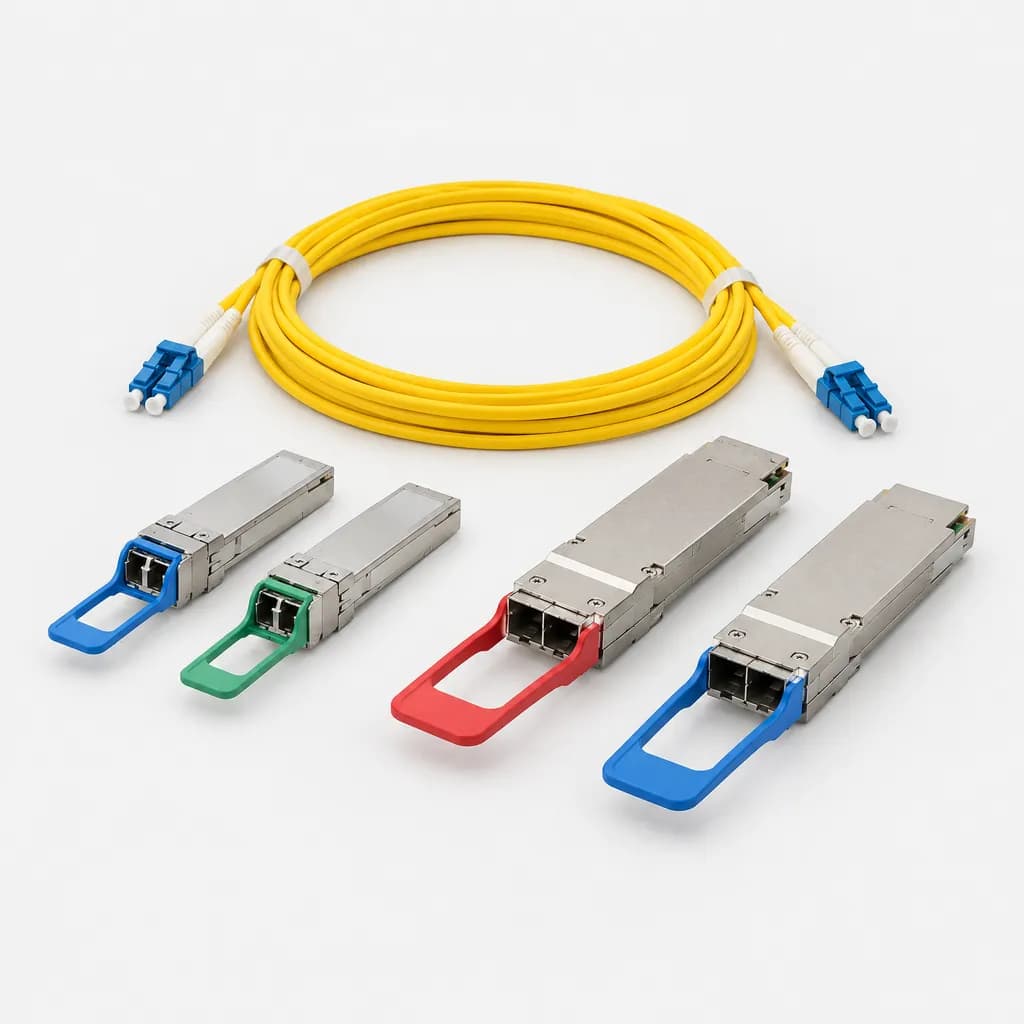
SFP, SFP+, SFP28 and QSFP Optical Transceivers, DAC and AOC Cables
Optics from 1G SFP to 100G QSFP28 and 400G QSFP-DD, original-brand or third-party coded for your switch, plus direct-attach and active optical cables. We match form factor, standard, wavelength, fibre type, connector and coding on every link so both ends come up first time.
| Condition | New (sealed) · Refurbished OEM optics on request |
|---|---|
| Ships from | Dubai, UAE |
| Brands | Original Cisco, Juniper, Arista, HPE Aruba, Fortinet and other OEM optics; third-party MSA-compliant optics coded for the host platform |
| Typical models | 1000BASE-SX and LX, 10GBASE-SR, LR and ER, 25GBASE-SR and LR, 40GBASE-SR4 and LR4, 100GBASE-SR4, LR4 and CWDM4, BiDi pairs, CWDM and DWDM channels, copper SFPs, DAC and AOC assemblies in standard lengths |
| Form factor | SFP, SFP+, SFP28, QSFP+, QSFP28 and QSFP-DD modules; DAC and AOC assemblies |
| Ports & interfaces | LC duplex for most duplex optics, MPO-12 for SR4 parallel optics, simplex LC for BiDi, RJ45 for copper SFPs |
| Performance | Reach depends on standard and fibre: 10GBASE-SR runs about 300 m on OM3 and 400 m on OM4; 10GBASE-LR 10 km on single-mode; 100GBASE-SR4 70 m on OM3 and 100 m on OM4; 100GBASE-LR4 10 km on single-mode |
| Power | Commercial temperature range (0 to 70 °C) as standard; industrial range (−40 to 85 °C) for outdoor cabinets and hot shelters on request |
| Operating system | EEPROM coding matched to the host switch's vendor and platform; DOM/DDM diagnostics supported on most modules. Some vendors' support teams may decline cases that involve third-party optics, so check your support terms. |
| Testing & grading | Third-party optics: coding verified for the target platform and per-unit test data passed on where the supplier provides it. OEM optics: serial list and visual check of labels and seals. |
| Warranty basis | Set out per quote. Vendor warranty may be restricted by region, or not apply at all, when a unit comes from outside the vendor's own sales channel; refurbished units carry the supplier's warranty where the supplier offers one. |
| Compliance & markings | Class 1 laser product labelling, RoHS, and MSA conformance (SFF-8472 or SFF-8636 diagnostics) as declared by the manufacturer |
| Packing | Individual anti-static clamshells or tubes with dust caps, boxed and labelled by part number |
| Order quantity | Business volumes only. We quote from a pilot batch up to a full project bill of materials; tell us the quantity per line and we size the sourcing to it. |
| Lead time | Varies with model, condition, quantity and destination; each quote states the lead time we have confirmed with the supplier. |
| Documents | Commercial invoice, packing list with part numbers and lengths, manufacturer datasheets, certificate of origin where required, air waybill or bill of lading |
- Price Beat Promise
- 15+ Years Export Experience
- Serials and Lifecycle Checked
- Export-Screened Orders
Best for
- Switch uplinks and core links in campus networks
- ISP access, aggregation and backhaul links
- Server and storage connections in data rooms
- Long-reach and single-strand links where fibre is scarce
How we source SFP, SFP+ and QSFP Optical Transceivers
Six things have to line up for an optical link to work: the form factor fits the port, the standard matches at both ends, the wavelength is the same (or a matched pair for BiDi), the fibre type suits the optic, the connector fits the patch cords, and the switch accepts the module's coding. Get one wrong and the link stays dark. When you order, give us the switch model at each end, the fibre type and the distance, and we will choose the optic for you.
Original-brand optics carry the switch vendor's part number and raise no support questions, but they cost more and can take longer to find. Third-party optics built to the MSA standards and coded with the host vendor's identifier work the same way in most switches and are widely used by ISPs and integrators. The trade-off is support: some vendors' engineers ask for original optics while they troubleshoot a fault. Many buyers settle on original optics in the core and coded optics at the edge.
Temperature matters in hot climates. Standard optics are rated to 70 °C case temperature, which an outdoor cabinet or a cooling-free shelter can exceed in summer; industrial-temperature modules cost a little more and stop that becoming an outage. Digital diagnostics (DOM) let you read transmit and receive power, so you can spot a dirty connector or a failing laser before it drops the link. Keep dust caps on until the moment of insertion and clean connectors before every mating.
Before you request a quote
Will a third-party SFP work in my Cisco, Aruba or Juniper switch?
Yes, if it is built to the MSA standard and coded for that vendor and platform. Uncoded or wrongly coded modules may be rejected or flagged as unsupported. Tell us the exact switch model and software version and we will supply optics coded to match.
What is a BiDi optic and why are they sold in pairs?
A BiDi optic sends and receives on one fibre strand using two different wavelengths, for example 1310 nm one way and 1550 nm the other. Each end must use the opposite half of the pair, so they are ordered as matched A and B modules.
Should a new building link use single-mode or multimode fibre?
Single-mode (OS2) covers almost any distance and every future speed, and the optics price gap with multimode has narrowed. Multimode OM4 still suits short runs inside a data room. For links between buildings we normally suggest single-mode.
Related product lines
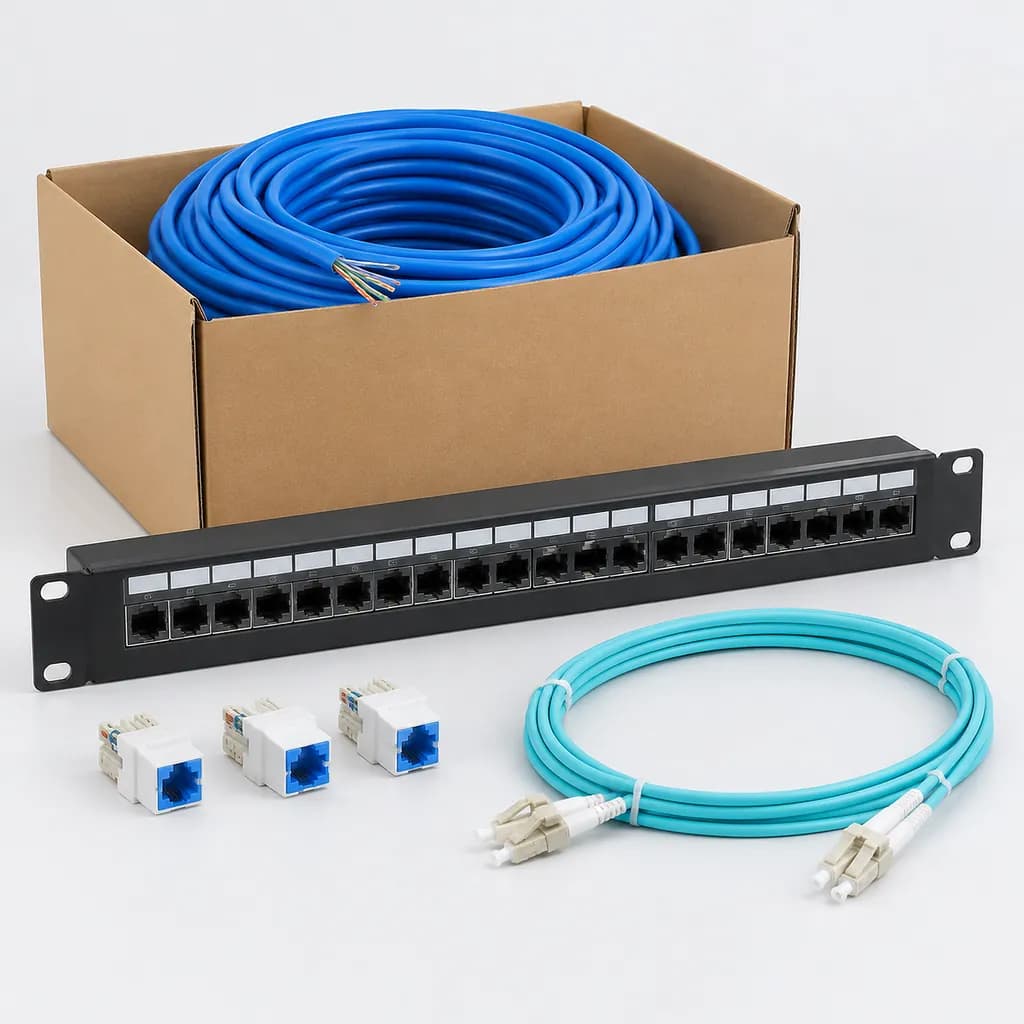
Structured Cabling: Copper and Fibre
Cat6/Cat6A U/UTP and F/UTP · OS2/OM3/OM4 · LSZH or PVC
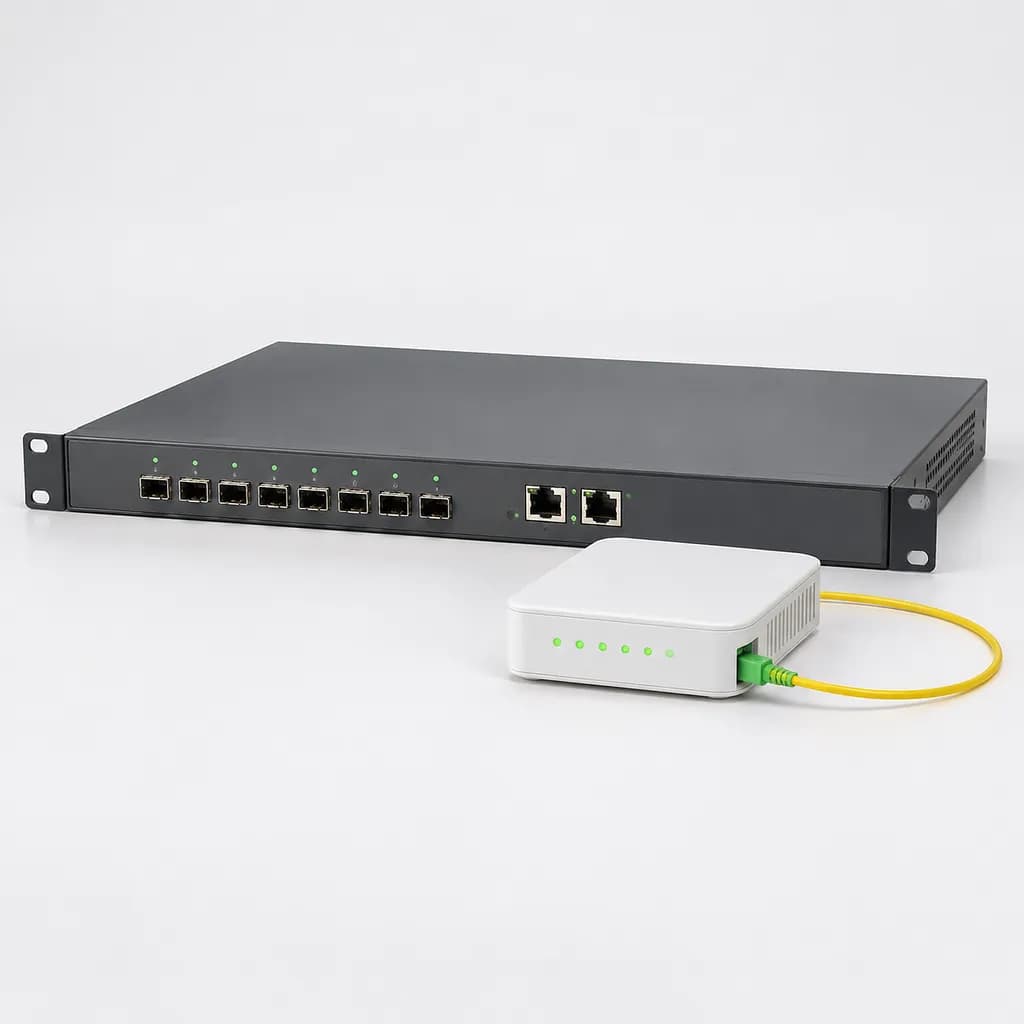
FTTH Access: OLT, ONT and PON Passives
GPON/XGS-PON · 4–16 PON compact or chassis · class B+/C+ optics
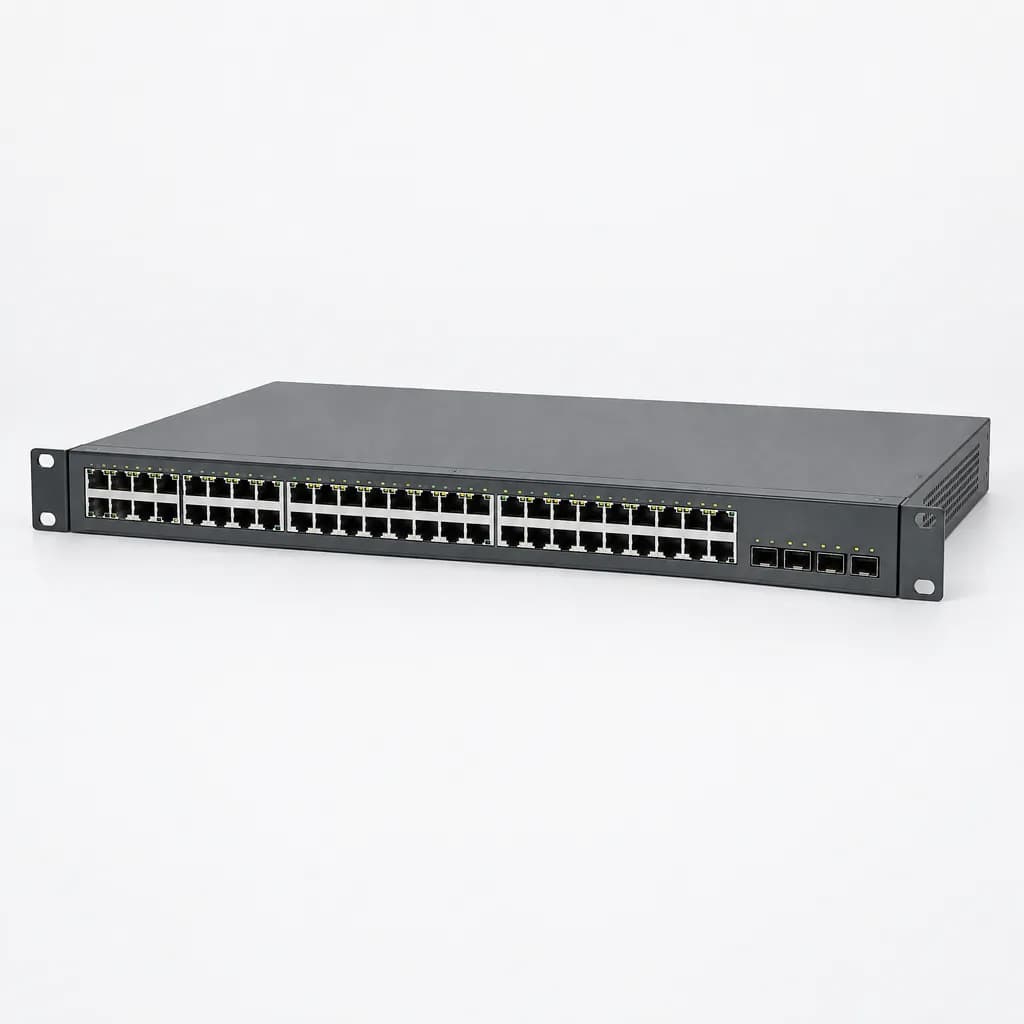
PoE Access Switches
8–48 ports · PoE/PoE+/802.3bt · 1G or mGig · SFP+ uplinks